|
|
You're on the Anyshift product newsletter list.
Unsubscribe anytime if you'd prefer not to hear from us. |
|
| | | Annie argues against her own answer before you see it | |
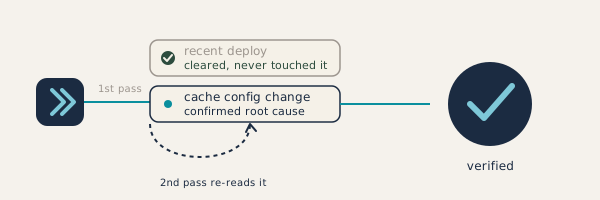
| Annie now runs a second pass on every root cause she finds, and that pass tries to break the first answer instead of confirming it. It re-reads the analysis against the versioned graph of your production, AWS, Kubernetes, your codebase, your commits, looks for a signal the first pass skipped, and clears the recent deploy that landed right before the errors but never touched the failing path. A confident wrong answer is the one an on-call engineer acts on at 2am, so the first reviewer of Annie's work is now Annie. |
|
| Annie reads your VictoriaMetrics during an investigation |
| Connect VictoriaMetrics and Annie queries it directly while she works an incident, pulling the series tied to the failing service instead of sending you to a dashboard to go find them. The metrics stay where they are. Annie reads them against the same versioned graph she uses for your deploys, commits, and infrastructure, so a spike lines up with the change that caused it. |
|
| | Know who to ask when the service isn't yours |
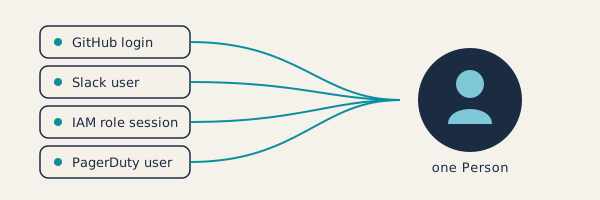
| Annie's graph already maps the things that exist in your production: services, deployments, clusters, resources. Annie Identity adds the people and agents who act on them, resolving one person's separate traces across GitHub, Slack, IAM, and PagerDuty into a single identity. So when you're paged for a service you didn't write, you can see who owns it and where the team already worked through it, and get one answer instead of four open tabs. Rolling out next. |
|
| |
| The Context for Production |
|
|
|